For teachers
How to Use Bilingual Books with ESL and Dual-Language Students
Ten practical ways to use books with two languages on the page, from ESL pull-out groups to dual-language classrooms.
By Sean Lee · October 21, 2026
Why bilingual books help
A bilingual book puts a student’s strongest language right next to the one they’re learning. Instead of guessing at meaning, a student can check it, and spend their energy on the new language rather than on decoding the story. For heritage-language learners and English speakers learning a world language, the same page works the other way round.
Books that pair each sentence with its translation, rather than putting whole pages side by side, make that checking especially easy: the two versions are never more than a line apart.
Ten classroom strategies
- Preview in the home language. Students read a page in their stronger language first, then the English.
- Sentence-pair reading. The teacher reads the English line; the student reads the translation, or the other way round.
- Partner reading across languages. Pair a student strong in English with one strong in the partner language; each reads their line.
- Echo reading. Read an English sentence aloud; students echo it, then find the matching words in the translation.
- Cognate hunts. In Spanish, French or German editions, find words that look alike (family / familia / famille / Familie).
- Vocabulary detectives. Pick five story words; students find each in both languages and draw it.
- Retell in either language. After a chapter, students retell it in the language of their choice, then try a sentence in the other.
- Compare punctuation and word order. Notice how questions and quotation marks look in each language.
- Family homework. Send a page home so families can read it in their language, which invites families into school reading.
- Gradual release. As confidence grows, cover the translation and reveal it only to check.
Start with a story students may already know, like Pride and Prejudice or Little Women, so the plot carries them while the language does the work.
Settings where they shine
- ESL/ELL pull-out and push-in support.
- Dual-language immersion (50/50 or 90/10) programs.
- World-language classes for English speakers.
- Heritage-language and weekend language schools.
- Library story times for mixed-language families.
Choosing a good bilingual book
- The translation is natural, not word-for-word.
- The two languages are easy to tell apart (color, font or position).
- The story is worth reading on its own, in either language.
- Pictures support meaning on every page.
Meet the Classics bilingual editions pair every English sentence with its translation in Spanish, Chinese (Simplified), French, German, Korean, Italian or Japanese, in its own color, beside the same illustrations as the English book.
Questions
- Do bilingual books help English learners?
- They let students check meaning in their stronger language instead of guessing, so they can focus on the new language. They also invite families to read along at home.
- How do you read a bilingual book with a student?
- Try sentence-pair reading: one of you reads the English line and the other reads its translation, then swap. Later, cover the translation and use it only to check.
- What ages are bilingual classics for?
- Meet the Classics bilingual editions are written for ages 6–9, and are also used with older beginners learning either language.
The book
All books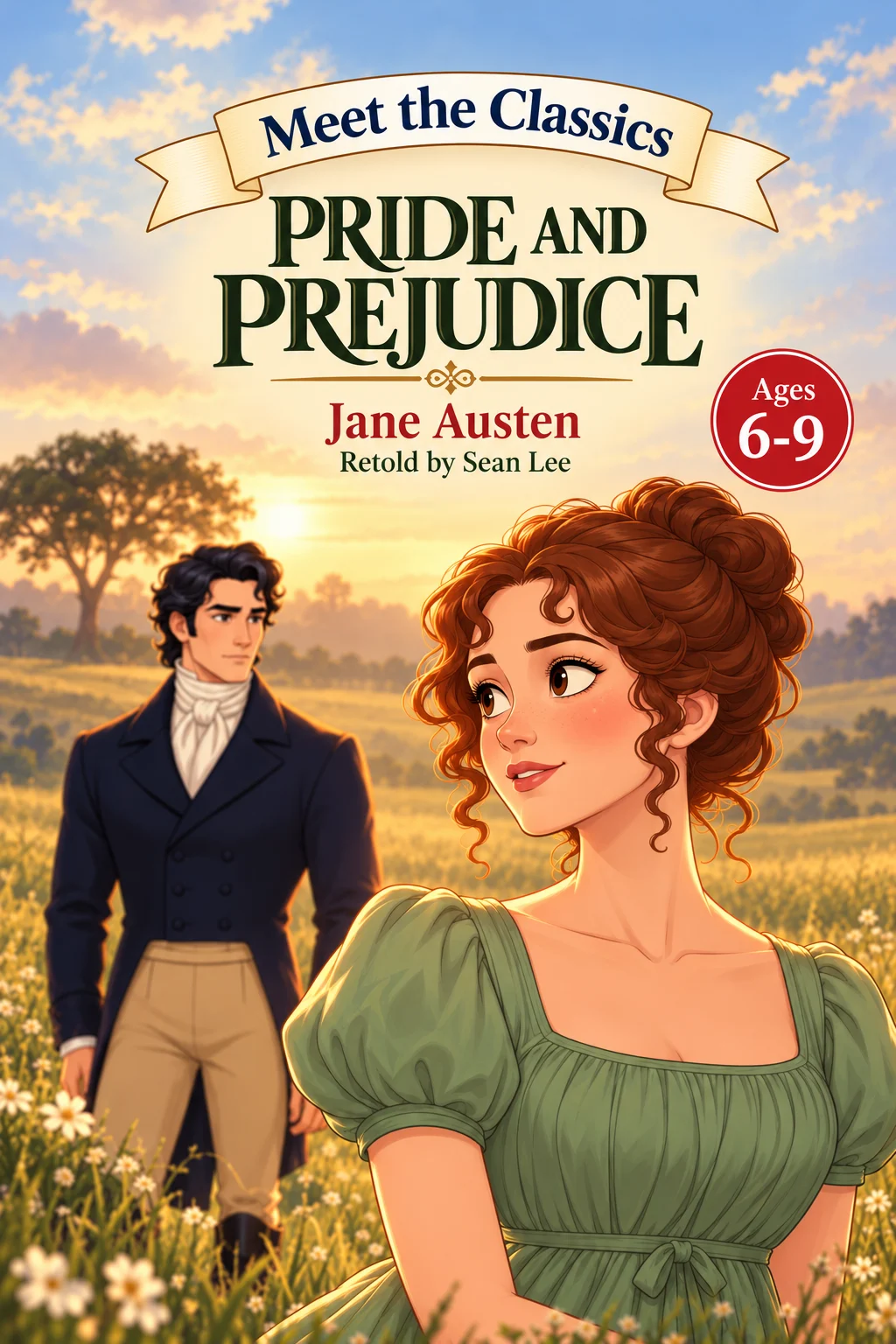
Pride and Prejudice
Ages 6–9, 72 pages