For parents
Northanger Abbey for Kids: A Parent’s Guide
Balls in Bath, a boastful carriage driver, a stormy night and a very silly secret scroll. How to bring Jane Austen’s funniest novel to young readers.
By Sean Lee · November 10, 2026
What is Northanger Abbey about?
Jane Austen’s novel, published in 1817, follows Catherine Morland, a cheerful seventeen-year-old from a country village who loves spooky adventure stories. When her kind neighbors, the Allens, take her to the busy city of Bath, she goes to balls, meets the witty Henry Tilney and his gentle sister Eleanor, and makes a dramatic new friend, Isabella Thorpe, whose brother John never stops bragging about his horse.
Then Catherine is invited to stay at Northanger Abbey, the Tilneys’ ancient family home. She is sure it must be full of secrets, just like the abbeys in her books. A stormy night, a locked cabinet and a mysterious roll of paper set her imagination racing, but the mystery turns out to be wonderfully ordinary. Catherine learns to trust good sense and true friends, and the story ends happily.
Meet the characters
- Catherine Morland: an honest, eager girl who loves books and always sees the best in people.
- Henry Tilney: a witty, kind young clergyman who loves novels and gentle teasing.
- Eleanor Tilney: Henry’s quiet sister, who becomes Catherine’s truest friend.
- Isabella Thorpe: a dramatic, fashionable friend who makes big promises.
- John Thorpe: Isabella’s loud brother, who brags about carriages and tells tall tales.
- General Tilney: Henry and Eleanor’s proud, strict father, master of Northanger Abbey.
- James Morland: Catherine’s kind older brother.
- Mrs. Allen: the friendly neighbor who takes Catherine to Bath and thinks mostly about dresses.
Why Northanger Abbey is a good first classic
Northanger Abbey is Austen’s lightest and funniest book, and its spooky moments are all in fun. The “secret scroll” Catherine finds on a stormy night turns out to be an old laundry bill, and the joke is always on her runaway imagination. Its troubles are ones children understand: a friend who breaks promises, a boy who tells lies, a misunderstanding that needs explaining and a grown-up who is unfair. When Catherine wrongly suspects the General of something terrible, Henry kindly sets her straight, which makes a gentle way to talk about checking the facts before we judge.
Big ideas to talk about
- Stories are wonderful, but we judge real people by what they really do.
- A true friend, like Eleanor, is kind when it matters, not just full of big promises.
- Lies, even small ones like John Thorpe’s, can cause a lot of hurt.
- It takes courage to stand up for what is fair, as Henry does.
Activities
- Make a “mystery scroll”: write an ordinary list, roll it up, tie it with string and hide it for someone to find.
- Hold a family ball: put on music, practice bowing and curtsying, and dance in the living room.
- Draw the abbey you imagine before reading, then compare it with the real Northanger in the book.
- Use our free Northanger Abbey discussion questions, character cards and unit study.
Questions
- What age is Northanger Abbey for?
- Austen’s novel is usually read by teens and adults. Gentle illustrated retellings introduce the story to children ages 6–9.
- When was Northanger Abbey written?
- Jane Austen finished an early version around 1803. It was published in December 1817, a few months after her death, together with Persuasion.
- Where does Northanger Abbey take place?
- In England around 1800: the village of Fullerton, the city of Bath and Northanger Abbey, the Tilney family home in Gloucestershire.
The book
All books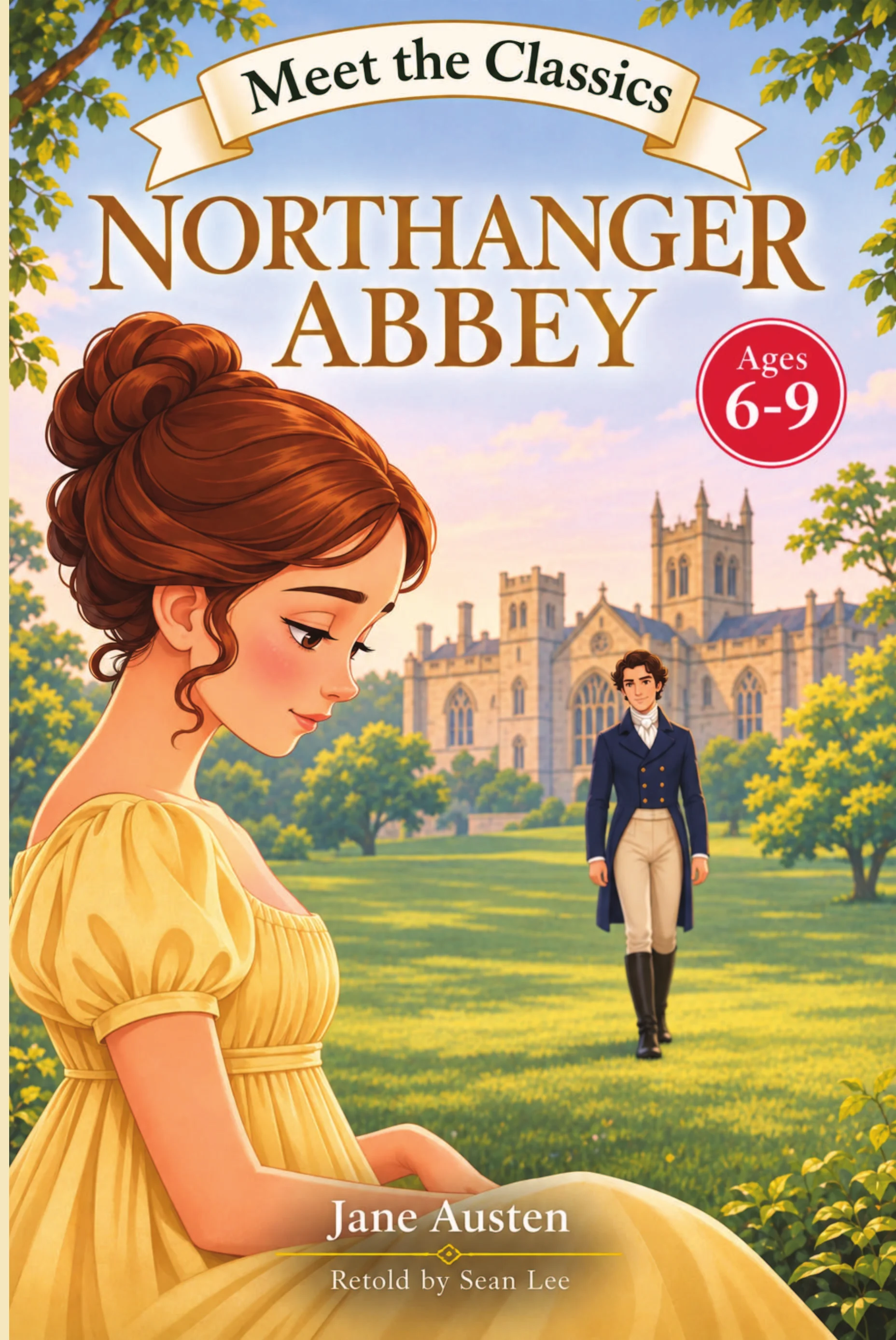
Northanger Abbey
Ages 6–9, 72 pages