For parents
The Odyssey for Kids: A Parent’s Guide
A one-eyed giant, a bag of winds, singing Sirens and a hero who never gives up. How to bring the world’s great adventure story to young readers.
By Sean Lee · November 10, 2026
What is The Odyssey about?
Homer’s ancient Greek poem, composed nearly three thousand years ago, follows Odysseus, the clever King of Ithaca, on his long voyage home after the Trojan War. Storms blow his ships off course, and he meets one strange danger after another: the Lotus-Eaters, a one-eyed giant called Polyphemus, a bag full of winds, the enchantress Circe, the singing Sirens, and a monster and a whirlpool guarding a narrow strait.
Meanwhile, at home on Ithaca, his wife Penelope and his son Telemachus are surrounded by greedy suitors who have moved into the palace and want Penelope to marry one of them. Telemachus sails off in search of news, and at last Odysseus comes home in disguise. With the help of his son, his faithful swineherd and the goddess Athena, he wins the contest of the great bow, clears out his palace and is reunited with Penelope.
Meet the characters
- Odysseus: the brave, clever King of Ithaca, trying for years to get home.
- Penelope: his wise, patient wife, who keeps the suitors waiting with a weaving trick.
- Telemachus: their son, a young prince who finds his courage.
- Athena: the goddess of wisdom, who watches over Odysseus and his family.
- Antinous: the rudest of the suitors who have taken over the palace.
- Polyphemus: a grumpy one-eyed Cyclops who traps Odysseus and his men in his cave.
- Circe: an enchantress who turns sailors into pigs, then becomes a helpful host.
- Eumaeus: Odysseus’s kind and loyal swineherd, who welcomes every stranger.
Is The Odyssey right for young children?
The adventures are thrilling, and children love the monsters and tricks, but the original poem is violent. The Cyclops eats some of Odysseus’s men, a six-headed monster snatches sailors, the whole crew is eventually lost, and the story ends with Odysseus killing all the suitors in his hall. Our retelling for ages 6–9 keeps the journey and the clever escapes but softens the hardest parts: no one is eaten, the visit to the land of the dead is left out, and the suitors are chased out of the palace instead. It’s a wonderful book for talking about patience, loyalty, kindness to strangers and using your head to solve problems.
Big ideas to talk about
- Clever thinking can beat even a giant: Odysseus wins with plans, not just strength.
- Home and family are worth waiting and working for.
- Listening to good advice matters: the sailors get into trouble when they open the bag of winds.
- Being kind to strangers is one of the most important things we can do.
Activities
- Play “Sneak Past the Cyclops”: one person is the sleepy giant with eyes closed, and everyone else tiptoes past without being tagged.
- Draw a map of Odysseus’s journey, with an island for each adventure.
- Weave a simple paper mat, then unweave it, like Penelope at her loom.
- Use our free Odyssey discussion questions, character cards and unit study.
Questions
- What age is The Odyssey for?
- The full poem, with its violence and old-fashioned language, is best for confident readers of about 12 and up. Gentle illustrated retellings suit ages 6–9, and favorite episodes like the Cyclops make great read-alouds.
- When was The Odyssey written?
- The Odyssey is thought to have been composed around the 8th century BC and is credited to the Greek poet Homer. It was first told aloud long before it was written down.
- Where does The Odyssey take place?
- On the Greek island of Ithaca and across the Mediterranean Sea, on magical islands such as those of the Cyclopes, Circe and the nymph Calypso.
The book
All books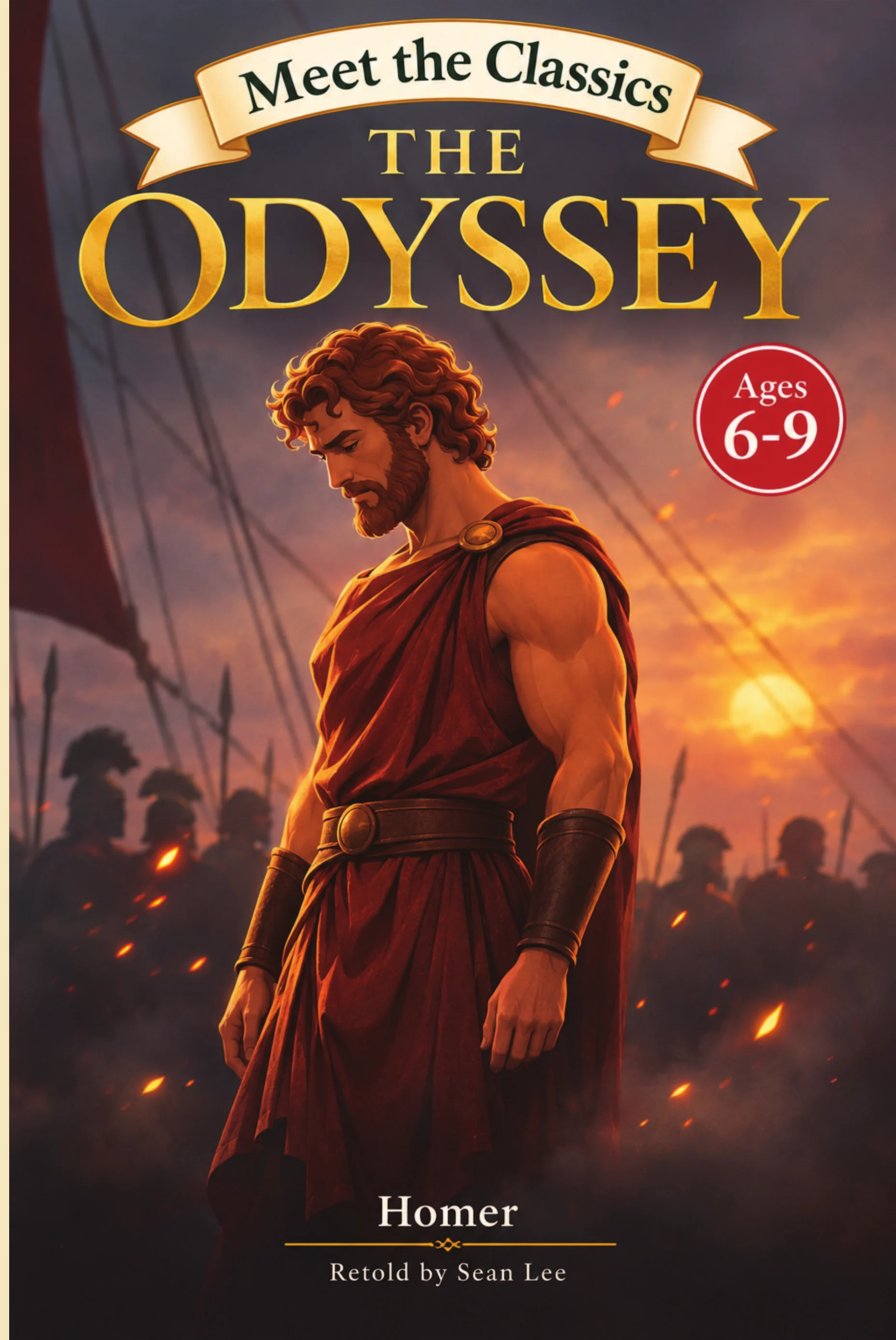
The Odyssey
Ages 6–9, 72 pages